Disinformation Exhibition brings media literacy and democratic awareness closer to citizens
EPLO Malta initiative engaged diverse audiences across multiple public venues, tackling online manipulation and fostering democratic resilience.


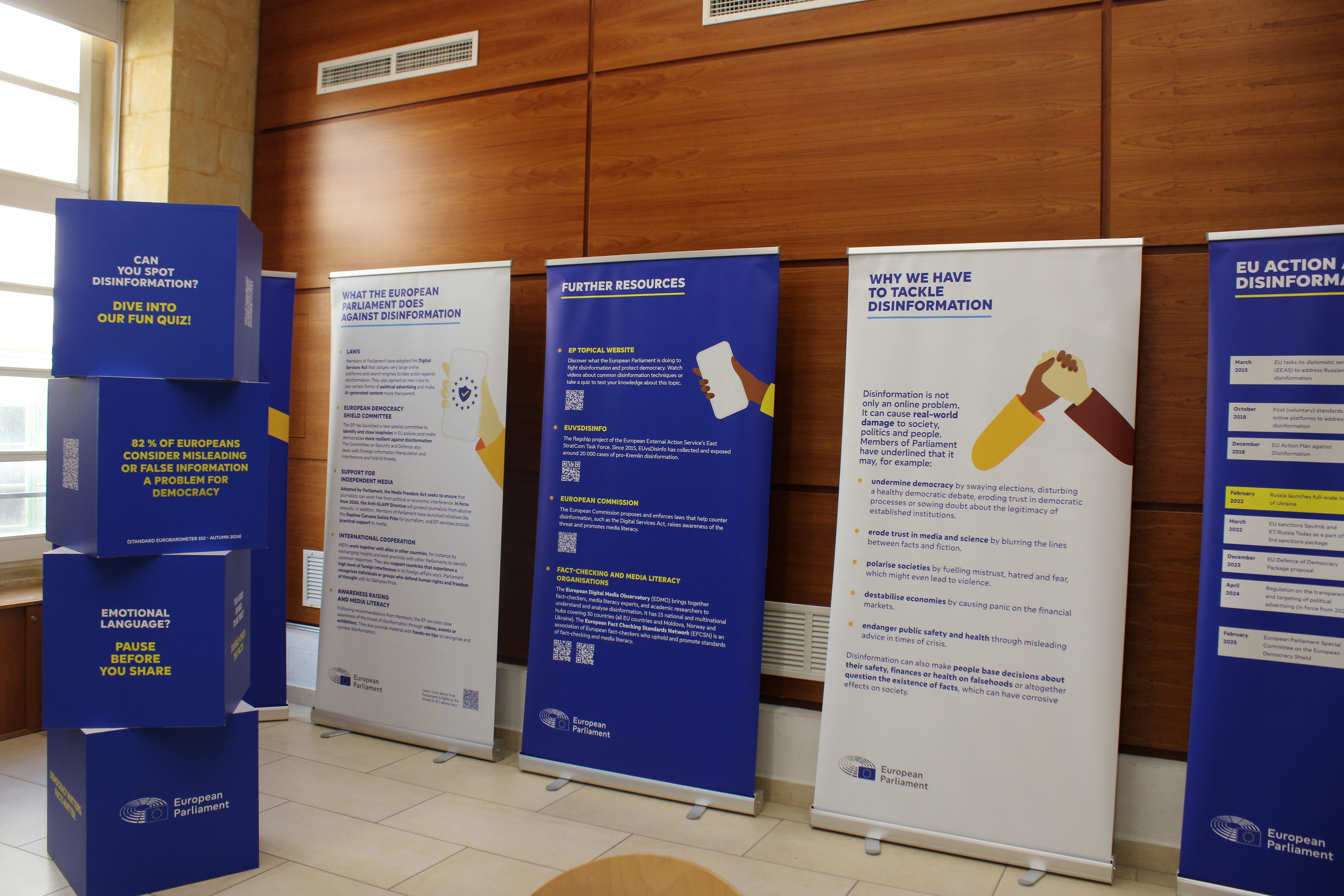
The European Parliament Liaison Office in Malta has been widely promoting its interactive and roving Disinformation Exhibition. Launched as a response to one of the most critical challenges facing contemporary democratic societies, the initiative aimed to raise public awareness, stimulate critical debate and equip citizens with the tools necessary to identify and counter misleading information.
A Broad Footprint Across Malta and Gozo
To maximise its reach, the exhibition travelled to a diverse range of public venues, academic institutions, and high-profile events following its initial launch at the University of Malta Library in April. It was prominently featured at:
• The Identifying Disinformation Conference, organised by the EPLO at the University of Malta Library;
• The Eden Cinemas, reaching mainstream cultural audiences;
• The ALDA Festival, hosted at the Malta International Contemporary Art Space (MICAS);
• The Europe Day celebrations in Gozo;
• The Diversity Conference, organised by the CORE Platform;
• All three sessions of the EU Unlocked course for entrepreneurs.
As part of this collaborative journey, EPLO Malta interviewed organisers and representatives from the various host venues to highlight the importance of bringing media literacy into the public sphere and making these vital discussions accessible to wider audiences.
Interactive Learning for the Digital Age
Moving away from static information displays, the exhibition utilised an engaging, multi-media format. It featured interactive cubes containing key messages, statistics, and QR codes, alongside detailed information panels. The content was structured to guide visitors through the multi-faceted nature of information warfare, inviting them to explore:
• Definitions: Clarifying the distinct differences between intentional disinformation and accidental misinformation.
• Mechanisms: Unpacking the motivations, actors, and sophisticated methods used to manipulate public opinion.
• Risks: Assessing the tangible threats that targeted campaigns pose to public debate and democratic decision-making.
• Institutional Responses: Highlighting the concrete actions being taken by the European Union and the European Parliament to regulate and tackle the issue.
• Empowerment: Providing practical tools and strategies that citizens can employ daily to verify sources and debunk misleading content.
Addressing a Growing Public Concern
The relevance of the exhibition is underscored by recent Eurobarometer data, which reveals that concern regarding disinformation remains exceptionally high in Malta. A significant majority of local respondents expressed explicit worry about the proliferation of false or misleading information online, particularly emphasizing the rise of artificial intelligence-generated content and deepfakes.
These statistics reinforce the urgent need for grassroots educational initiatives. By bringing the exhibition directly to the heart of local communities, the EPLO Malta aimed to foster a culture of reflection and shared responsibility, demonstrating that an informed citizenry is the ultimate defence against democratic disruption.