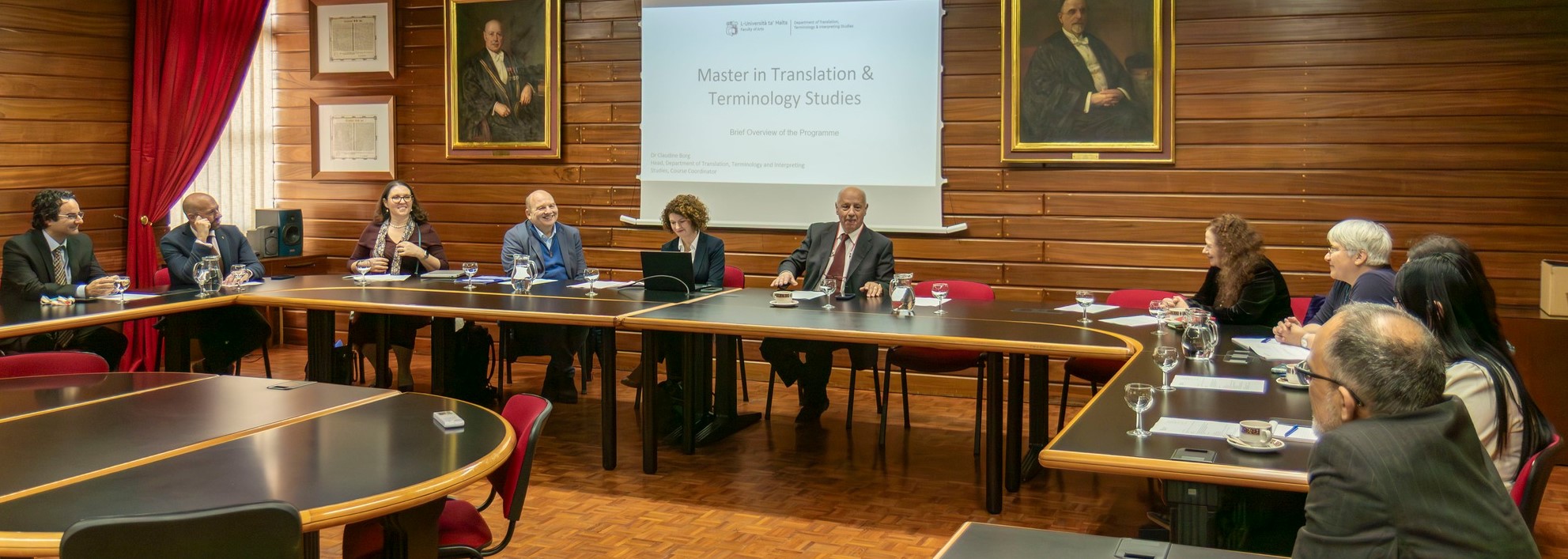
European Parliament’s Translation Service Engages with Students and Professionals in Malta
From 18 to 20 March 2026, the European Parliament’s translation service was in Malta for a series of activities aimed at connecting with students, educators, and language professionals - and opening the door to careers in multilingual communication.


Across three days, the programme brought together key voices from the European Parliament and Malta’s academic and professional community, creating space for discussion, learning, and exchange.
Why language matters
One of the standout moments was a panel discussion at the University of Malta on “The Language of Democracy – Ensuring Every Voice is Heard”.
The session featured Valter Mavrič, Director-General for Translation and Clear Language, alongside Rhoda Garland, Commissioner for the Rights of Persons with Disabilities, Professor Ray Fabri, and Nicole Bartolo.
Together, they highlighted a simple but powerful idea: in the European Union, language is not just a tool - it is what makes democracy accessible.
With 24 official languages, translators play a crucial role in ensuring that citizens can understand and engage with EU policies - bridging cultures, ideas, and perspectives.
A closer look at the profession
Students also had the opportunity to explore how translation works in practice. A hands-on workshop at Europe House in Valletta was led by Valter Mavrič and Clare Bugeja Gafà, Head of the Maltese Translation Unit, giving participants practical insights into tools, workflows, and career opportunities within the European Parliament.
Participants could also take part in individual meetings with recruiters, offering a valuable first step towards potential careers in the European Institutions.
Translation in a changing world
The visit also addressed how the profession is evolving in the context of AI and new technologies.
During the Joseph Eynaud Memorial Lecture, organised by the University of Malta, Prof. Joss Moorkens and Valter Mavrič explored how the role of translators is expanding - rather than disappearing - in a rapidly changing digital landscape.
The message was clear: while technology is transforming the field, human expertise remains essential to ensure quality, accuracy, and cultural understanding.
Building connections locally
The programme also included meetings with key academic and institutional stakeholders, including Prof. Alfred Vella, Rector of the University of Malta, as well as faculty representatives and officials from the Ministry of Education.
These discussions focused on how to encourage more students to pursue language studies and how to ensure a strong future pipeline of language professionals in Malta.
At the same time, media interviews - including with RTK radio and Times of Malta - helped bring the conversation to a wider audience.
Part of a wider conversation
DG Trad's outreach action also joined forces with the broader “Art of Activism” initiative, organised in collaboration between JEF Malta and the EP Office in Malta, connecting young people through talks, workshops, and creative activities focused on democratic participation.
Looking ahead
More than anything, the visit showed that languages remain at the heart of Europe - not just as a profession, but as a way of connecting people.
By engaging directly with Malta’s students and educators, the European Parliament continues to invest in the next generation - ensuring that every voice can be heard, understood, and represented.
.jpeg)